

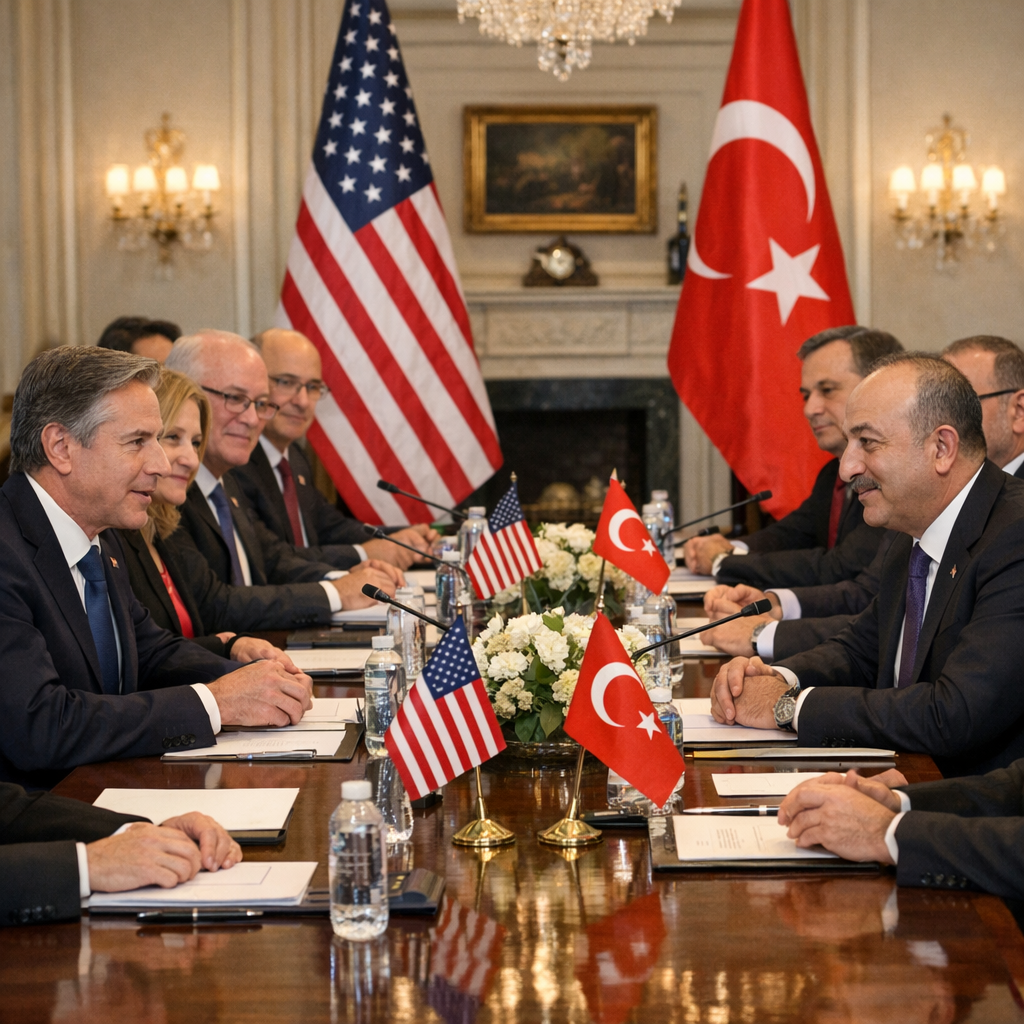
The relationship between the United States and Turkey has been multifaceted, encompassing diplomatic, economic, and military dimensions. Established in 1927, diplomatic ties have evolved through various global events and policy shifts.
Historical Context
After World War II, Turkey aligned with the West, becoming a NATO member in 1952. This alliance was solidified during the Cold War, with Turkey playing a strategic role in regional security. The 1947 Economic and Technical Cooperation agreement further strengthened bilateral ties, reflecting mutual interests in promoting stability and economic growth.
Economic Interactions
Trade has been a cornerstone of U.S.-Turkey relations. The European Union-Turkey Customs Union, established in 1995, facilitated increased trade between Turkey and Western nations, including the U.S. However, economic challenges such as high inflation and currency fluctuations have impacted Turkey’s economic landscape, influencing bilateral trade dynamics.
Defense and Security Cooperation
Defense collaboration has been significant, with Turkey hosting U.S. military assets and participating in joint operations. However, Turkey’s acquisition of Russian S-400 air defense systems has strained relations, leading to debates over Turkey’s role within NATO and its alignment with U.S. defense policies.
Current Challenges and Prospects
Recent years have seen tensions over issues like Syria, human rights, and differing foreign policy objectives. Despite these challenges, both nations continue to engage in dialogue to address mutual concerns and explore avenues for cooperation. The evolving geopolitical landscape necessitates a nuanced approach to sustaining this complex relationship.
Understanding the intricacies of U.S.-Turkey relations is crucial for comprehending broader regional dynamics and the interplay of global powers in shaping international affairs.