

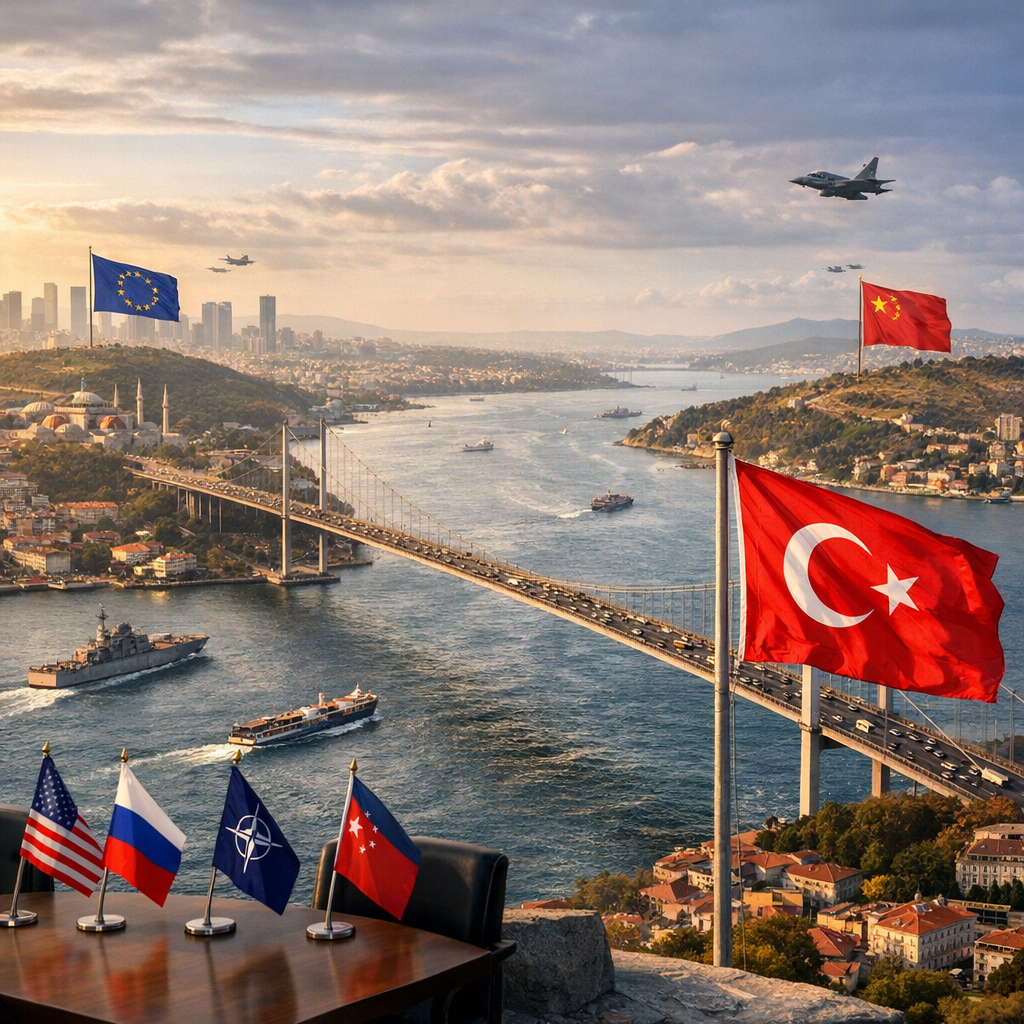
Turkey’s unique geographic location, straddling Europe and Asia, has long positioned it as a pivotal player in international affairs. In recent years, its foreign policy has undergone significant transformations, reflecting a shift towards a more assertive and independent stance.
Historical Context
Founded in 1923 from the remnants of the Ottoman Empire, Turkey initially pursued a secular, Western-aligned foreign policy. It joined NATO in 1952 and sought closer ties with the European Union. However, the end of the Cold War and regional dynamics prompted a reevaluation of its international role.
Assertive Foreign Policy
Under President Recep Tayyip Erdoğan, Turkey has adopted a more proactive approach. This includes military interventions in Syria and Libya, as well as involvement in the South Caucasus. Such actions signify a departure from its previous status quo-oriented policies.
Regional Influence
Turkey’s engagement in the Middle East has been multifaceted. It has played roles in mediating conflicts and has been involved in regional economic initiatives. Its strategic location and cultural ties have enabled it to act as a bridge between different regions.
Global Ambitions
Beyond its immediate neighborhood, Turkey has sought to assert itself on the global stage. It has called for reforms in international institutions, advocating for a more equitable representation that reflects the changing world order.
Challenges and Prospects
While Turkey’s assertive policies have expanded its influence, they have also led to tensions with traditional allies and neighboring countries. Balancing its regional ambitions with global partnerships remains a complex challenge.
As Turkey continues to navigate the evolving geopolitical landscape, its actions will undoubtedly have significant implications for regional and global politics.