

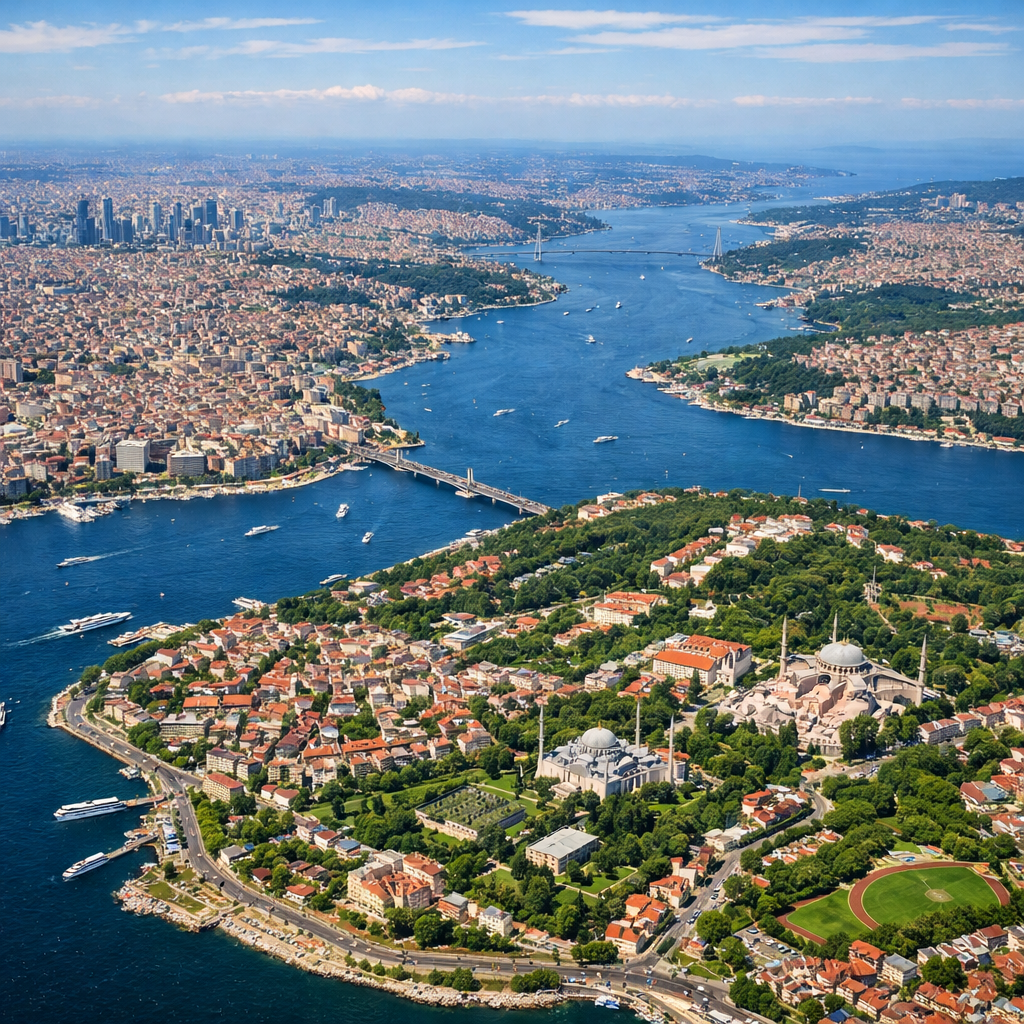
Istanbul, a city where history and modernity intertwine, has experienced significant urbanization over the past decades. This rapid development has led to the emergence of the Urban Heat Island (UHI) effect, a phenomenon where urban areas register higher temperatures than their rural counterparts.
What is the Urban Heat Island Effect?
The UHI effect occurs when natural landscapes are replaced with dense concentrations of pavement, buildings, and other surfaces that absorb and retain heat. This transformation leads to elevated temperatures in urban areas, especially during the night. Factors such as reduced vegetation, increased energy consumption, and specific building materials contribute to this effect.
Impact on Istanbul
Studies have shown that Istanbul’s UHI intensity varies seasonally, with the most pronounced effects during the summer months. Research indicates that the city’s nighttime UHI intensity has been increasing by approximately 0.41–0.50°C per decade, while daytime intensity has seen a slight decrease of 0.13–0.18°C per decade. This trend is closely linked to the city’s expansion and population growth.
Mitigation Strategies
Addressing the UHI effect requires a multifaceted approach:
- Enhancing Green Spaces: Increasing urban greenery through parks, green roofs, and tree-lined streets can provide shade and promote evaporative cooling.
- Implementing Reflective Materials: Utilizing materials that reflect rather than absorb heat for rooftops and pavements can reduce surface temperatures.
- Promoting Sustainable Urban Planning: Designing urban areas with adequate ventilation corridors and considering the thermal properties of building materials can help mitigate heat accumulation.
By understanding and addressing the UHI effect, Istanbul can work towards creating a more comfortable and sustainable urban environment for its residents.