

By Aylin Kaya
Millions Displaced by Conflict and Persecution
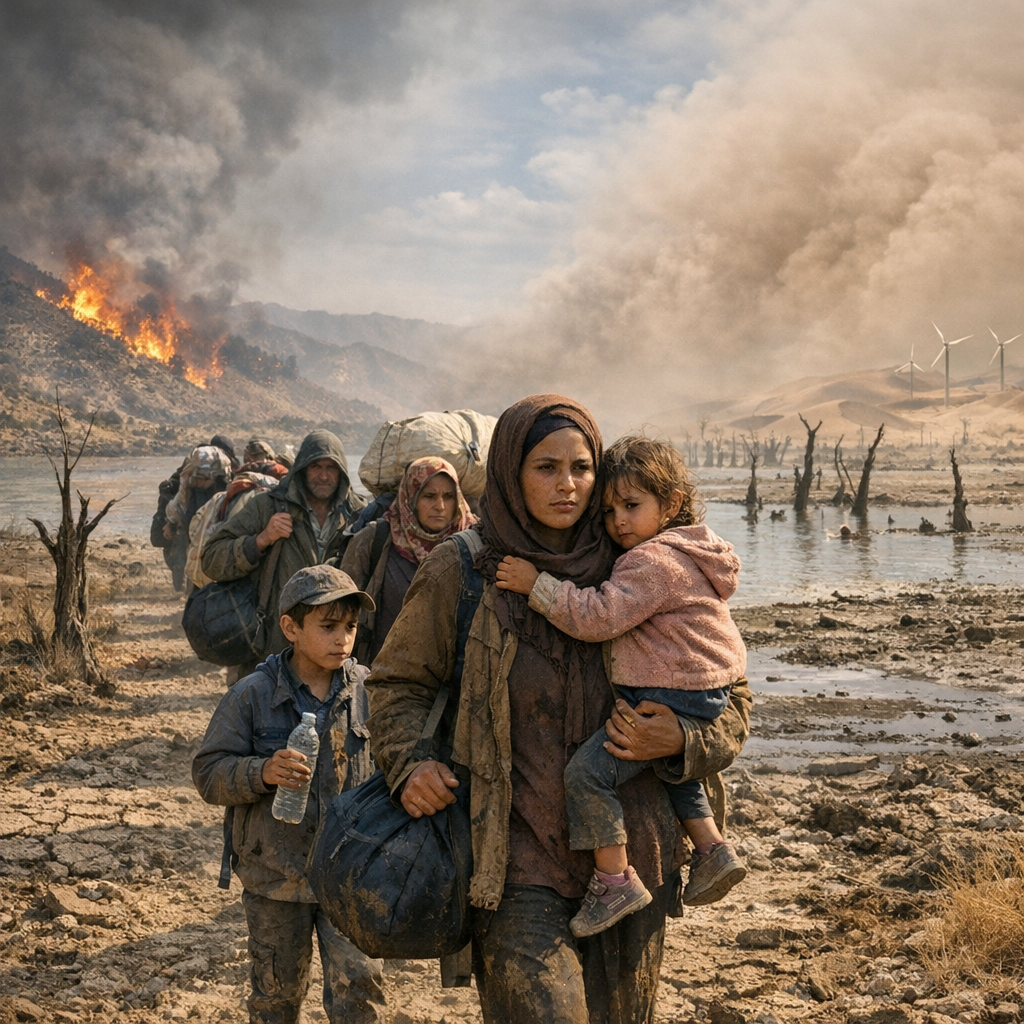
Recent UN figures show nearly 118 million people have been forced from their homes due to conflict and persecution. Many are living in protracted displacement—years without stable options for return, resettlement, or sufficient assistance. In Sudan alone, some 9.1 million people have fled their homes amid ongoing strife, making it one of the world’s largest displacement crises today. — Overall, refugee agencies warn that current emergency funding and infrastructure are severely stretched.
These crises are not confined to distant regions; their ripple effects can reach Istanbul and beyond, through migration flows, global aid allocation, and geopolitical shifts.
Climate Change: Commitments, Gaps, and the Road Ahead
The Paris Agreement remains the central framework for global climate action. Its goal is to limit global temperature increases to well below 2°C and pursue efforts toward 1.5°C above pre-industrial levels.
Nearly every nation is a party to climate treaties like the UN Framework Convention on Climate Change, and recent processes—including nationally determined contributions (NDCs) and the transparency mechanisms—seek to track and sharpen climate efforts. However, experts note that many countries are not yet meeting the ambitious targets required, and warming is still expected to surpass 1.5°C in the near future.
Ongoing Challenges
- Funding and support gaps: Vulnerable nations often lack the financial and technical resources to implement climate mitigation or adaptation effectively.
- Implementation delays: Commitments exist, but turning policies into action—such as reducing emissions, installing resilient infrastructure or safeguarding food production—lags behind.
- Humanitarian pressures amplified by climate: Climate shocks—droughts, floods, heatwaves—often magnify existing crises caused by conflict or poverty.
Why It Matters for Istanbul and Turkey
Istanbul sits at the crossroads of migration routes—both forced and voluntary. Conflicts in neighbouring regions, combined with climate-driven displacement, will continue to shape Turkey’s social, economic, and political landscape.
Moreover, Turkey is already experiencing climate-related stress: changing rainfall patterns, heatwaves, and risks to agriculture and water supplies. Implementing stronger climate adaptation while aligning with global agreements can help protect both people and ecosystems.
What Needs to Be Done
To respond to these interconnected crises, global cooperation must not only continue—but evolve. Key areas of focus include:
- Coordinated funding mechanisms aimed especially at protracted displacement and climate resilience.
- Support for health infrastructure in conflict zones to reduce secondary crises like outbreaks and malnutrition.
- Transparent tracking of climate commitments—with civil society involvement—to ensure accountability.
- Policies that consider both conflict resolution and climate adaptation together, rather than in isolation.
While the scale of these global challenges may feel overwhelming, collective action and sustained policy focus can help ensure that lives are saved, vulnerabilities are reduced, and future risks are addressed—wherever we are in the world.