

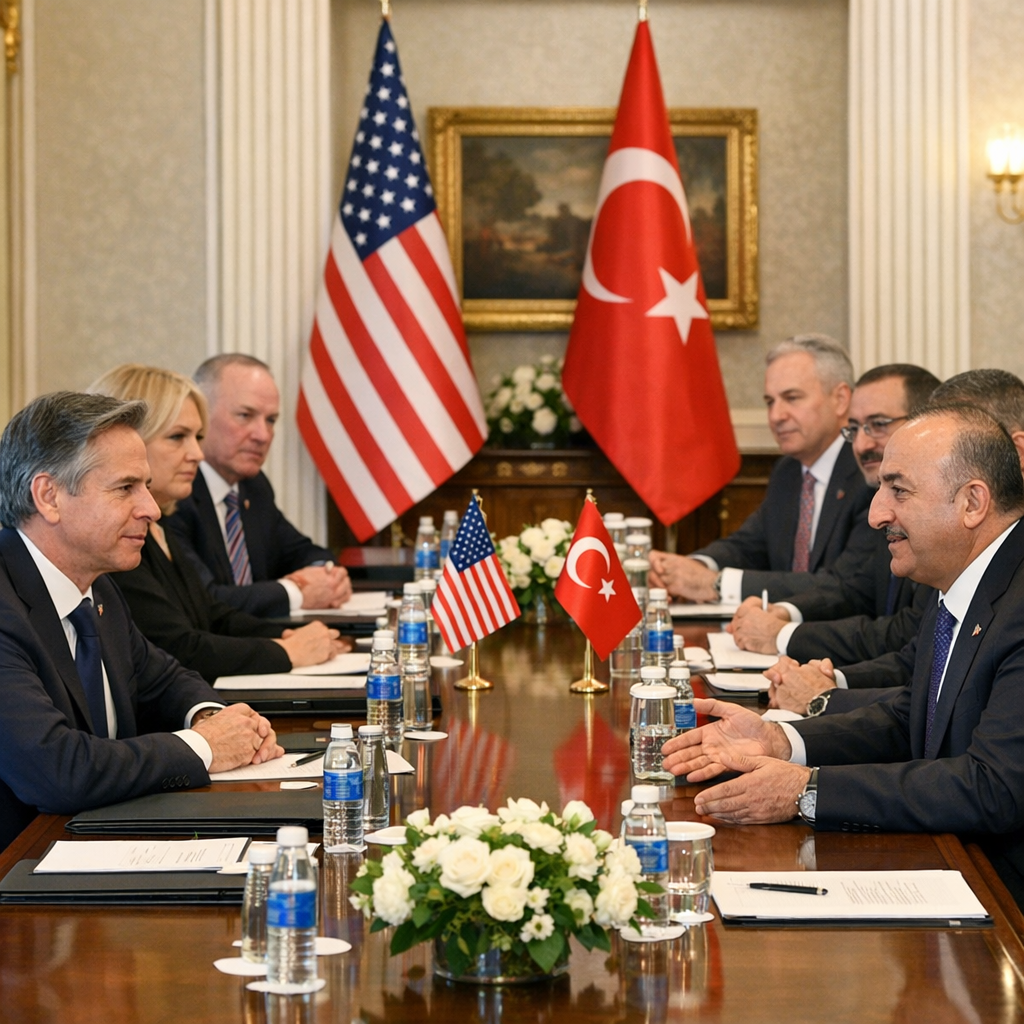
The relationship between the United States and Turkey has been multifaceted, encompassing diplomatic, economic, and military dimensions. Established in 1927, diplomatic ties have evolved through various global events and strategic alliances.
Historical Context
After World War II, Turkey aligned with the West, becoming a NATO member in 1952. This alliance was solidified during the Cold War, with Turkey supporting U.S. initiatives, including sending troops during the Korean War. The partnership aimed to promote regional stability and counter common threats.
Economic Relations
Economic collaboration has been a cornerstone of U.S.-Turkey relations. In 2024, bilateral trade reached an estimated $43.0 billion, marking an 8.6% increase from the previous year. U.S. goods exports to Turkey were valued at $20.4 billion, while imports stood at $16.4 billion, resulting in a U.S. goods trade surplus of $4.0 billion. This economic partnership underscores mutual benefits and the potential for further growth.
Strategic Cooperation and Challenges
Both nations have collaborated on various regional issues, including counterterrorism efforts and addressing conflicts in the Middle East. However, challenges have emerged, such as differing policies in Syria and Turkey’s acquisition of Russian S-400 defense systems, leading to tensions within the NATO framework. These developments have prompted discussions on the future trajectory of the alliance.
Looking Ahead
As global dynamics shift, the U.S. and Turkey continue to navigate their partnership, balancing cooperation with addressing disagreements. Ongoing dialogue and mutual respect remain essential in fostering a relationship that serves the interests of both nations and contributes to regional and global stability.