

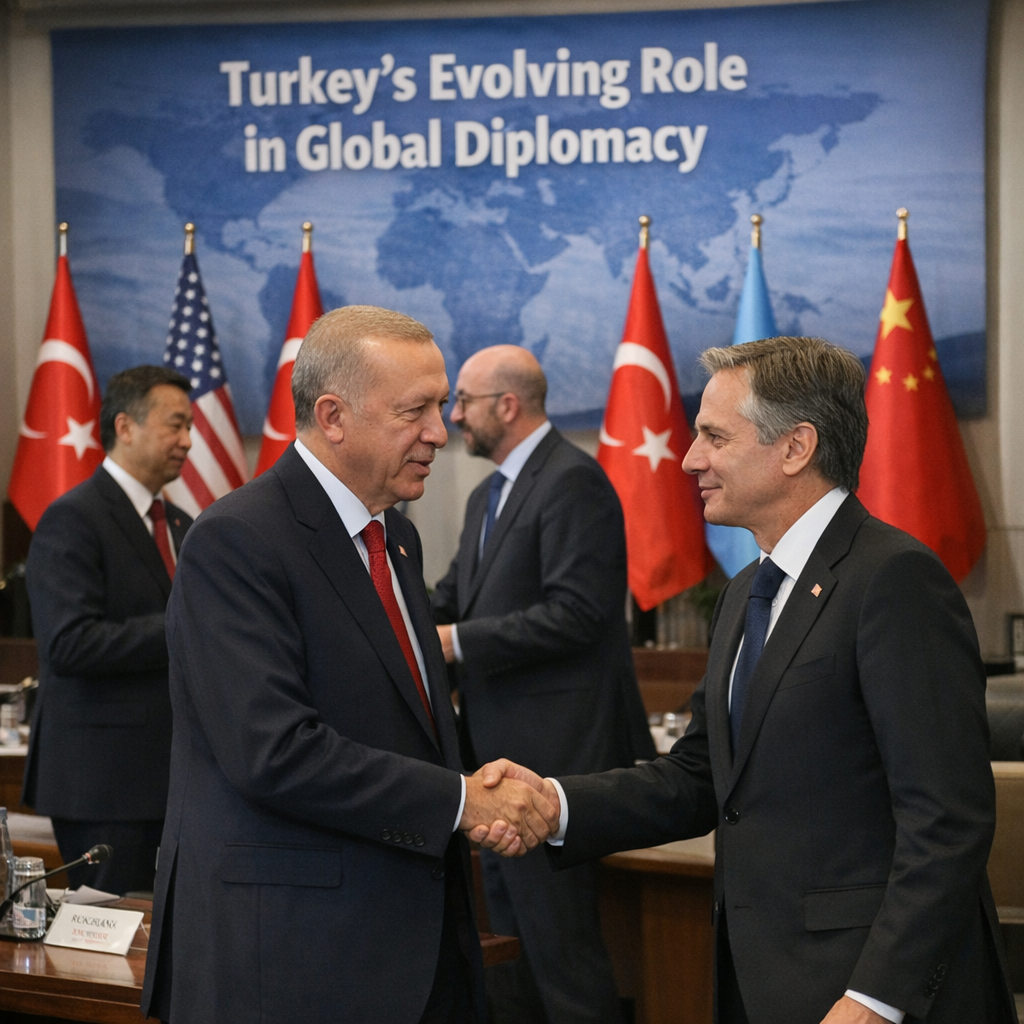
Turkey’s unique geographical location, bridging Europe and Asia, has long positioned it as a pivotal player in international affairs. In recent years, Ankara has actively expanded its diplomatic engagements, reflecting a strategic vision aimed at enhancing its global influence.
Strategic Geopolitical Position
Situated at the crossroads of continents, Turkey controls critical waterways such as the Bosporus and the Dardanelles, which connect the Black Sea to the Mediterranean. This control grants Turkey significant leverage over maritime trade routes and regional security dynamics. Additionally, Turkey’s proximity to volatile regions like the Middle East and the Caucasus underscores its importance in global geopolitics.
Active Participation in International Organizations
Turkey is a founding member of the United Nations and has been a member of NATO since 1952. Its involvement in these organizations underscores its commitment to collective security and international cooperation. Moreover, Turkey’s bid for European Union membership, although facing challenges, reflects its aspiration to integrate more deeply with Western institutions.
Humanitarian Diplomacy
Beyond traditional diplomacy, Turkey has emerged as a significant humanitarian actor. Hosting over 3.6 million Syrian refugees, Turkey has demonstrated a substantial commitment to humanitarian aid. Its efforts in countries like Somalia and Myanmar further highlight its proactive stance in addressing global humanitarian crises.
Balancing Relations with Global Powers
Turkey’s foreign policy exhibits a delicate balance between maintaining ties with Western allies and engaging with emerging powers. While it remains a key NATO member, Turkey has also sought closer relations with Russia and China, reflecting a multifaceted approach to its international partnerships.
Regional Mediation Efforts
Turkey has positioned itself as a mediator in regional conflicts, leveraging its relationships to facilitate dialogue. For instance, its involvement in the Astana Process alongside Russia and Iran aims to address the Syrian conflict, showcasing Turkey’s role in seeking regional stability.
Conclusion
Turkey’s evolving foreign policy reflects a strategic effort to enhance its role as a regional and global actor. By leveraging its geographical position, participating actively in international organizations, and engaging in humanitarian and mediation efforts, Turkey continues to shape its influence on the global stage.